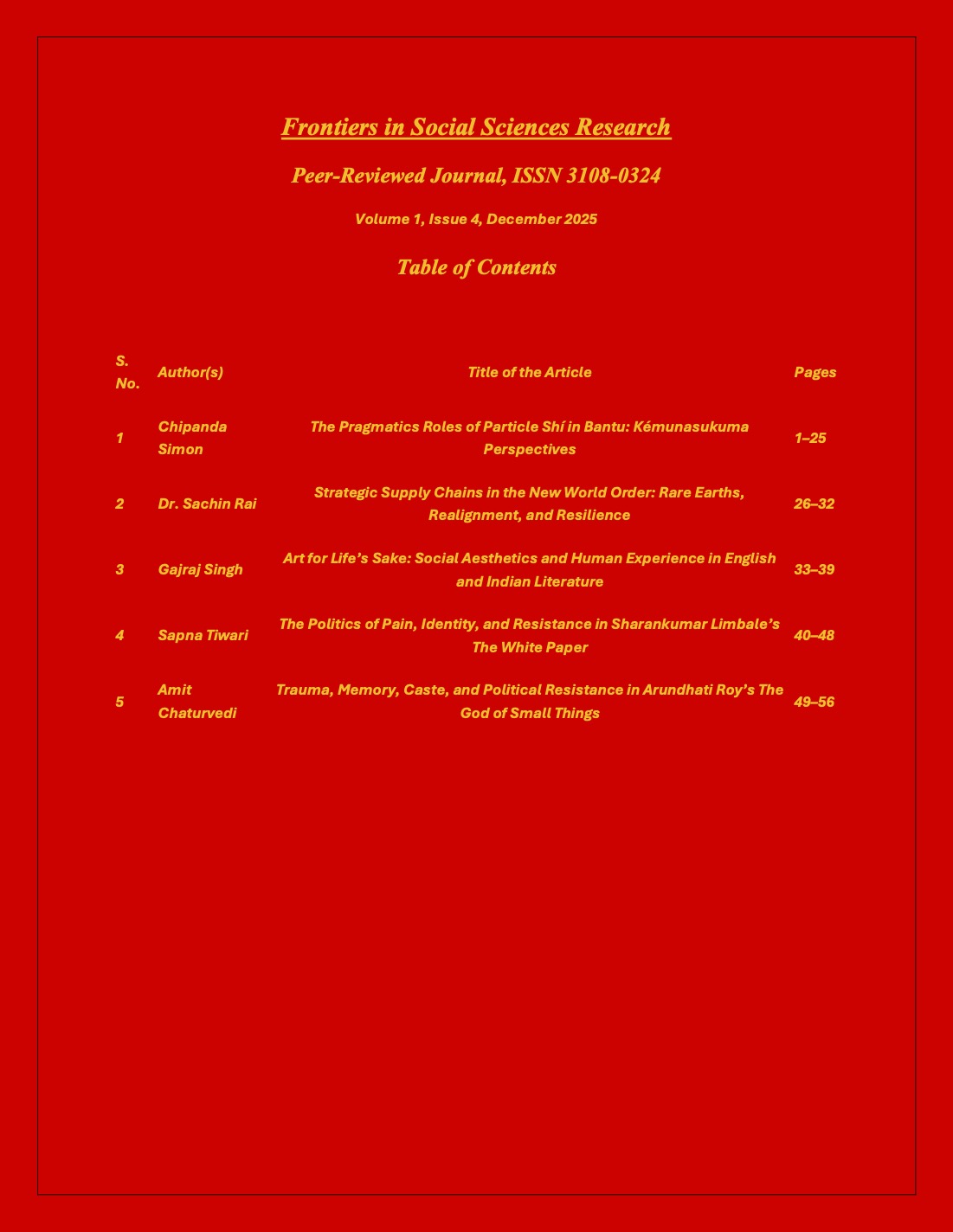
The Pragmatics Roles of Particle Shí in Bantu: Kémunasukuma Perspectives
DOI:
https://doi.org/10.24113/ydk80z69Keywords:
Bantu, Pragmatics, Relevance theory, particle sh, KisukumaAbstract
The paper describes the roles of Kisukuma shí particle in Kisukuma language classified zone F unit 21. The shi particle seems to have portmanteau facet as native speakers use it in different pragmatic contexts, such contextual roles be a magnet for the desired descriptions. The work applied Relevancy Theory which gears cognitive and communication inferences. The study applied pragmatic paradigm in which the communicative context housed the data, case study design designed the study from Njigami village of Geita rural district in Geita region. The envisioning of the shi gist was analysed qualitatively whereby words, phrases and sentences were constructed using Leipzig glossing roles. The study used Sukuma population in which ten (10) Sukuma native speakers aged 50-70 were selected purposively as they speak the language and are Sukuma monolingual speakers. Focus group discussion, document analysis and intuition technique were the methods of data hotchpotch. The discussion took two days, within the discussion; the researcher jotted down notice and recorded the discussion pertinent to practices done by informants in exemplifying the shi functions. The study found that the shi particle is a portmanteau morph factorizing permission, compulsion role, emotive role, lexical role, numbers, and caress role, requesting role, deverbal role, sanction role and causation. Basing on the shi envisioning, it was recommended that the same particle can be studied in the scope of its phonological manifestation domains, also other syntactic particles as in phrasal verbs, conjunction and prepositions should be investigated to see how Bantu languages contribute to the development of phonological and syntactic theories.
Downloads
Published
Issue
Section
License
Copyright (c) 2025 Chipanda Simon (Author)

This work is licensed under a Creative Commons Attribution 4.0 International License.
License Terms (CC BY 4.0)
All articles published in Frontiers in Social Sciences Research (FSSR) are licensed under the Creative Commons Attribution 4.0 International License (CC BY 4.0).
Under this license, readers are free to:
-
Share — copy and redistribute the material in any medium or format
-
Adapt — remix, transform, and build upon the material for any purpose, even commercially provided that the following conditions are met:
Attribution
You must give appropriate credit to the original author(s), provide a link to the license, and indicate if any changes were made.
Attribution should not suggest that the author(s) or the journal endorse your use of the work.
No Additional Restrictions
You may not apply legal terms or technological measures that legally restrict others from doing anything the license permits.
License Link
To view a copy of this license, visit: