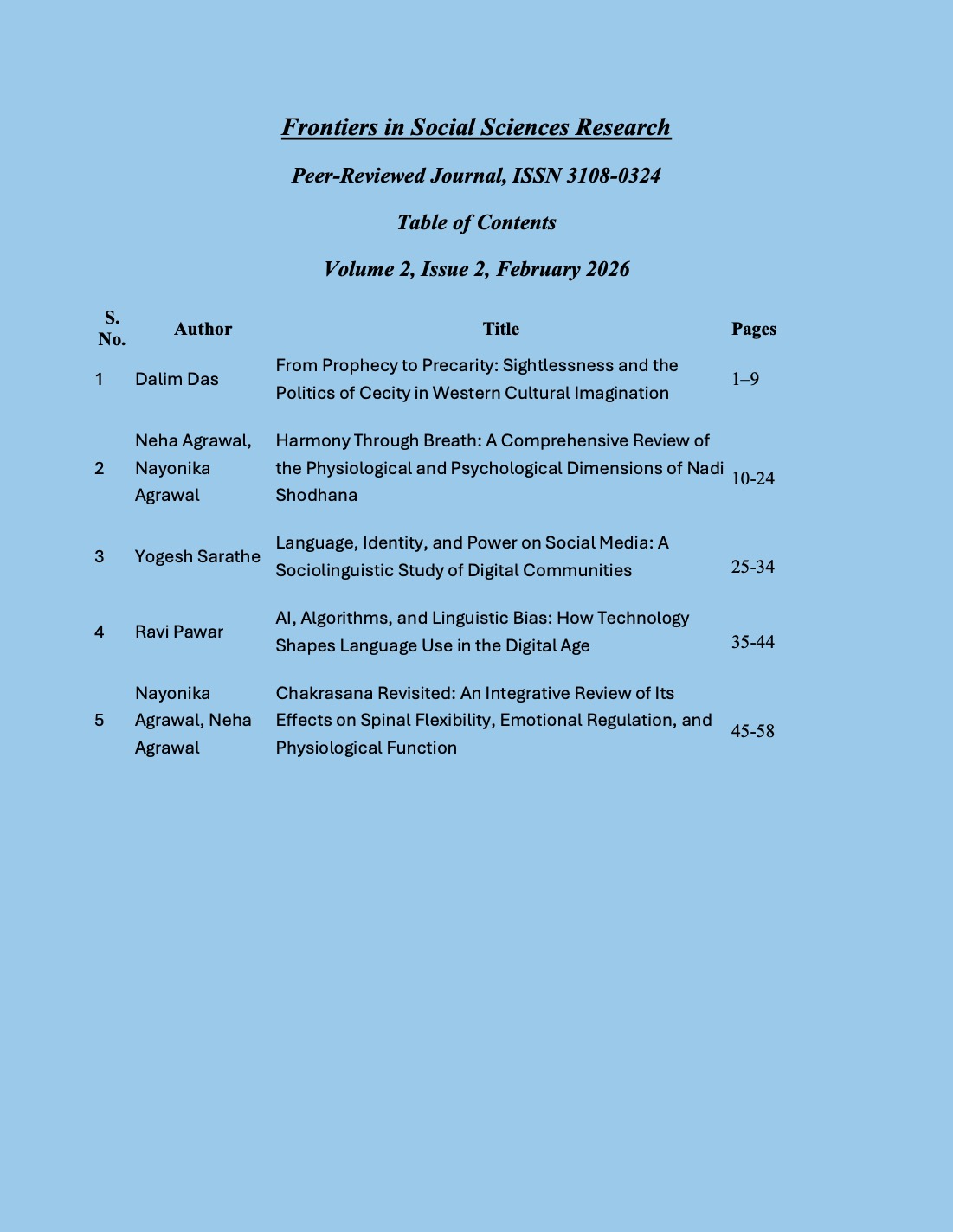
AI, Algorithms, and Linguistic Bias: How Technology Shapes Language Use in the Digital Age
DOI:
https://doi.org/10.24113/em0kjk03Keywords:
Artificial Intelligence; Algorithmic Bias; Sociolinguistics; Digital Communication; Linguistic Inequality; Language Ideology; Machine Learning; Moderation Systems; Voice Assistants.Abstract
This paper examines how artificial intelligence (AI), machine learning algorithms, and automated digital systems shape linguistic practices, reinforce or challenge linguistic hierarchies, and influence communication in contemporary society. As digital platforms increasingly mediate human interaction, algorithms determine what content becomes visible, which linguistic varieties are privileged, and how users adapt their language to gain visibility and engagement. The study explores algorithmic bias in search engines, social media feeds, voice assistants, and automated moderation systems, highlighting how these technologies reproduce existing social inequalities related to class, caste, gender, and ethnicity. Drawing on sociolinguistic theories of language ideology, linguistic capital, and digital discourse, the paper argues that AI-driven communication environments are not neutral but deeply ideological. They shape linguistic norms, influence identity performance, and regulate public discourse. The findings underscore the need for critical sociolinguistic engagement with AI systems to ensure equitable, inclusive, and culturally sensitive digital communication.
Downloads
Published
Issue
Section
License
Copyright (c) 2026 Ravi Pawar (Author)

This work is licensed under a Creative Commons Attribution 4.0 International License.
License Terms (CC BY 4.0)
All articles published in Frontiers in Social Sciences Research (FSSR) are licensed under the Creative Commons Attribution 4.0 International License (CC BY 4.0).
Under this license, readers are free to:
-
Share — copy and redistribute the material in any medium or format
-
Adapt — remix, transform, and build upon the material for any purpose, even commercially provided that the following conditions are met:
Attribution
You must give appropriate credit to the original author(s), provide a link to the license, and indicate if any changes were made.
Attribution should not suggest that the author(s) or the journal endorse your use of the work.
No Additional Restrictions
You may not apply legal terms or technological measures that legally restrict others from doing anything the license permits.
License Link
To view a copy of this license, visit: