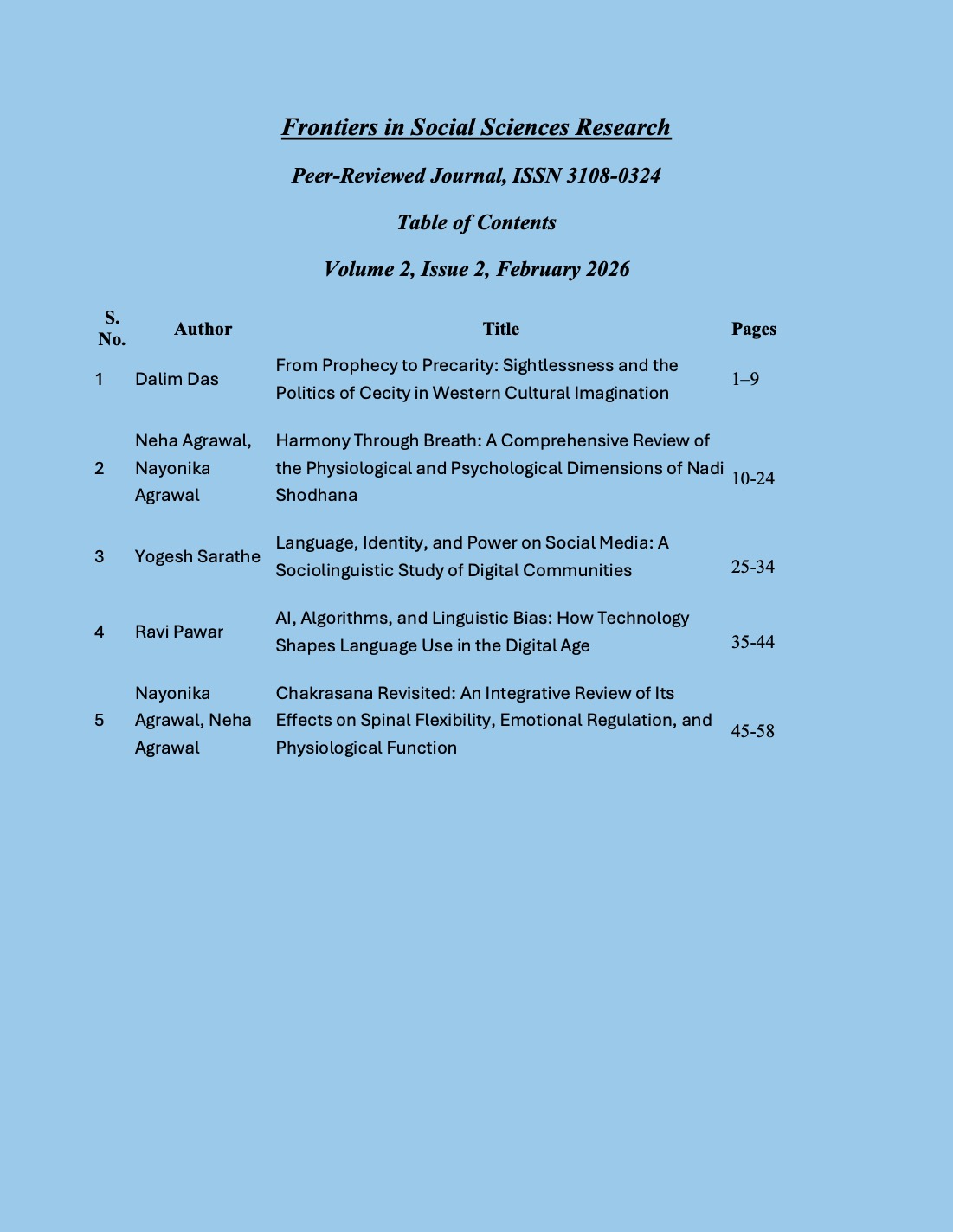
Language, Identity, and Power on Social Media: A Sociolinguistic Study of Digital Communities
DOI:
https://doi.org/10.24113/pzsckh16Keywords:
Sociolinguistics; Social Media; Identity; Power; Code-Switching; Digital Communities; Linguistic Ideology; Multilingualism; Discourse Analysis.Abstract
This paper examines how language practices on social media construct, negotiate, and contest identity and power in digital communities. Drawing on sociolinguistic theories of discourse, identity performance, code-switching, and linguistic ideology, the study analyzes how users on platforms such as Instagram, X (formerly Twitter), YouTube, and WhatsApp strategically deploy linguistic resources to signal belonging, assert authority, resist marginalization, and shape collective narratives. The paper argues that digital communication is not merely a reflection of offline sociolinguistic patterns but an intensified, accelerated, and algorithmically mediated arena where linguistic choices carry heightened social consequences. Through examples from Indian multilingual contexts, global youth culture, and influencer discourse, the study demonstrates how digital language practices reinforce and disrupt hierarchies of class, caste, gender, and ethnicity. The findings highlight the need for a critical sociolinguistic understanding of digital spaces, where language becomes a tool of visibility, virality, and symbolic capital.
Downloads
Published
Issue
Section
License
Copyright (c) 2026 Yogesh Sarathe (Author)

This work is licensed under a Creative Commons Attribution 4.0 International License.
License Terms (CC BY 4.0)
All articles published in Frontiers in Social Sciences Research (FSSR) are licensed under the Creative Commons Attribution 4.0 International License (CC BY 4.0).
Under this license, readers are free to:
-
Share — copy and redistribute the material in any medium or format
-
Adapt — remix, transform, and build upon the material for any purpose, even commercially provided that the following conditions are met:
Attribution
You must give appropriate credit to the original author(s), provide a link to the license, and indicate if any changes were made.
Attribution should not suggest that the author(s) or the journal endorse your use of the work.
No Additional Restrictions
You may not apply legal terms or technological measures that legally restrict others from doing anything the license permits.
License Link
To view a copy of this license, visit: