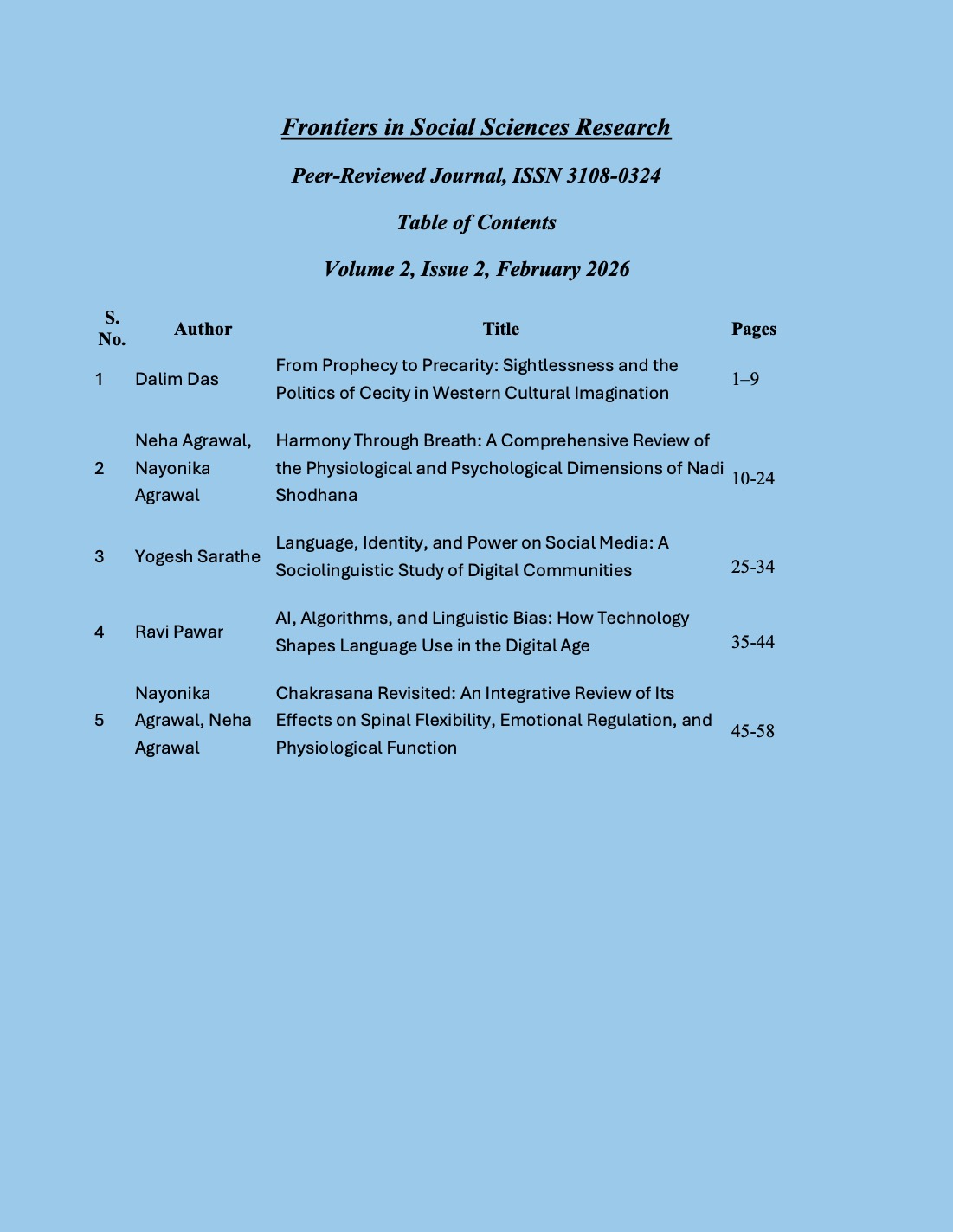
Chakrasana Revisited: An Integrative Review of Its Effects on Spinal Flexibility, Emotional Regulation, and Physiological Function
DOI:
https://doi.org/10.24113/c42q7755Keywords:
Chakrasana, Wheel Pose, spinal flexibility, emotional well-being, yoga therapy, physiological function, backbendAbstract
Chakrasana (Wheel Pose), a classical spinal extension posture in traditional yoga practice, is widely regarded for its transformative physical and psychological effects. While anecdotal and experiential accounts highlight its capacity to enhance vitality and emotional openness, systematic scientific evaluation of its mechanisms remains limited. This integrative review examines Chakrasana through both traditional yogic frameworks and contemporary biomedical literature to explore its physiological and psychophysiological implications. Evidence suggests that the posture significantly engages the posterior kinetic chain, enhances spinal extensor strength, and promotes thoracic expansion, thereby influencing respiratory efficiency and musculoskeletal resilience. Additionally, the intense spinal extension and chest opening associated with Chakrasana may stimulate sympathetic activation, potentially contributing to heightened alertness and autonomic responsiveness. Emerging literature also indicates possible associations with improved mood regulation and emotional processing, although causal pathways remain insufficiently defined. Despite promising interdisciplinary insights, targeted empirical research isolating the specific effects of Chakrasana is limited. Further controlled studies are necessary to clarify dose-response relationships, long-term adaptations, and distinct neurophysiological mechanisms. Integrating classical yogic theory with modern scientific inquiry may provide a more comprehensive understanding of Chakrasana’s role in holistic health.
Downloads
Published
Issue
Section
License
Copyright (c) 2026 Nayonika Agrawal, Neha Agrawal (Author)

This work is licensed under a Creative Commons Attribution 4.0 International License.
License Terms (CC BY 4.0)
All articles published in Frontiers in Social Sciences Research (FSSR) are licensed under the Creative Commons Attribution 4.0 International License (CC BY 4.0).
Under this license, readers are free to:
-
Share — copy and redistribute the material in any medium or format
-
Adapt — remix, transform, and build upon the material for any purpose, even commercially provided that the following conditions are met:
Attribution
You must give appropriate credit to the original author(s), provide a link to the license, and indicate if any changes were made.
Attribution should not suggest that the author(s) or the journal endorse your use of the work.
No Additional Restrictions
You may not apply legal terms or technological measures that legally restrict others from doing anything the license permits.
License Link
To view a copy of this license, visit: