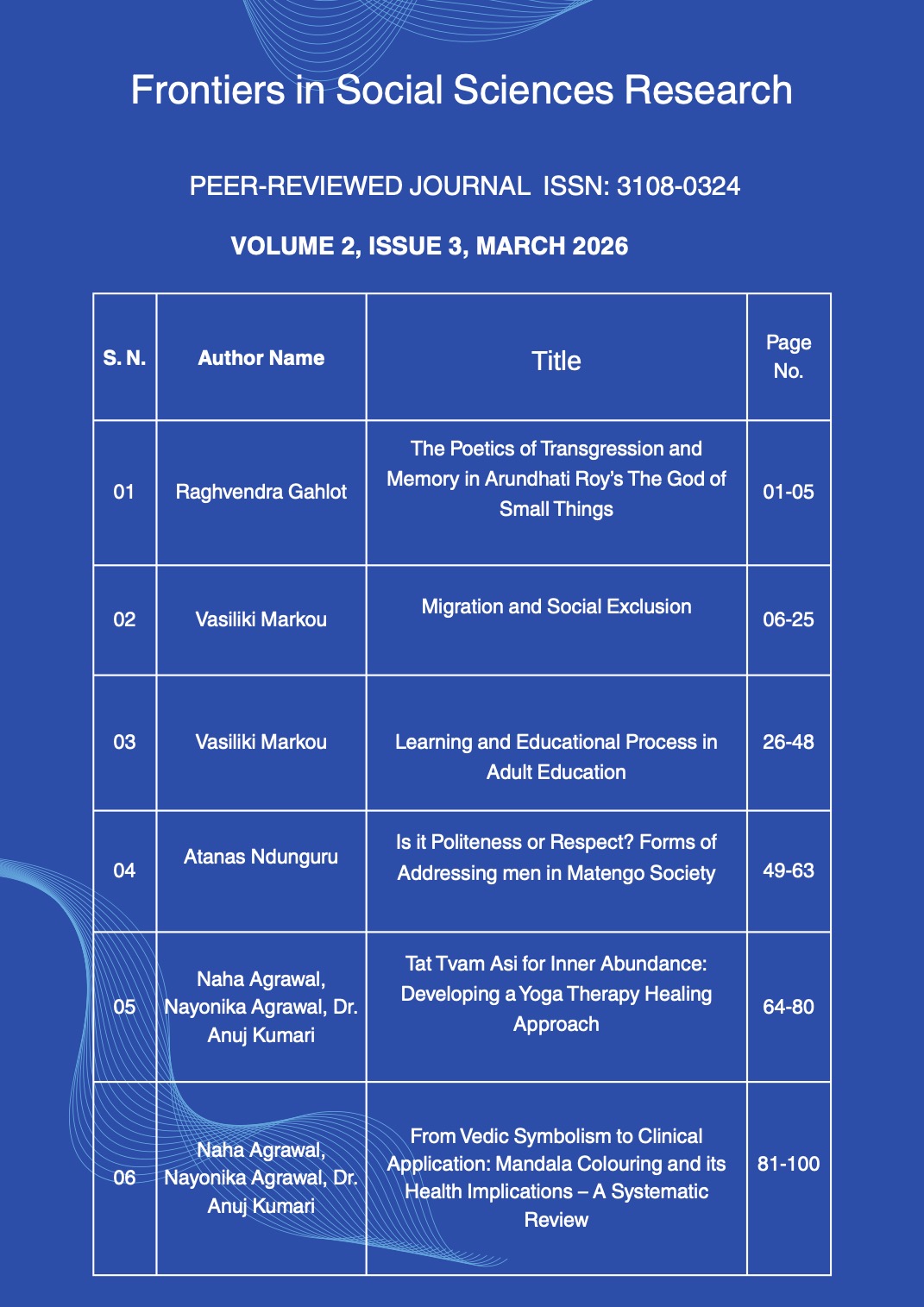
Migration and Social Exclusion
DOI:
https://doi.org/10.24113/y5v4hk85Keywords:
Immigration, Migration, Social ExclusionAbstract
In recent years, the intensification of the migration phenomenon has become a fact, with the result that many people leave their country in search of shelter elsewhere. In this change of life, it is essential, through access to education, to acquire new knowledge, for their integration into the host country. Adult education is called upon to respond to this new reality, not only by providing knowledge and skills to this vulnerable group of learners, but also by developing critical reflection in relation to the acquired attitudes and assumptions. Adult migrants have certain special characteristics that differentiate them from other learners, very often experiencing social exclusion without being able to participate equally in public goods, such as education. In addition, the difficulties they face in terms of their integration into the labor market and the lack of professional identity contribute to their economic exclusion and their inability to live in terms of dignity. The negative experiences they have had in the past, combined with the adverse discrimination they suffer, contribute to their often negative self-image and to their strong suspicion of the majority population. It is worth emphasizing that the significant socio-economic problems they face and the feelings of disadvantage they experience are reinforced by the absence of an organized framework of protection, on the part of the state, regarding these social groups.
Downloads
Published
Issue
Section
License
Copyright (c) 2026 Vasiliki Markou (Author)

This work is licensed under a Creative Commons Attribution 4.0 International License.
License Terms (CC BY 4.0)
All articles published in Frontiers in Social Sciences Research (FSSR) are licensed under the Creative Commons Attribution 4.0 International License (CC BY 4.0).
Under this license, readers are free to:
-
Share — copy and redistribute the material in any medium or format
-
Adapt — remix, transform, and build upon the material for any purpose, even commercially provided that the following conditions are met:
Attribution
You must give appropriate credit to the original author(s), provide a link to the license, and indicate if any changes were made.
Attribution should not suggest that the author(s) or the journal endorse your use of the work.
No Additional Restrictions
You may not apply legal terms or technological measures that legally restrict others from doing anything the license permits.
License Link
To view a copy of this license, visit: