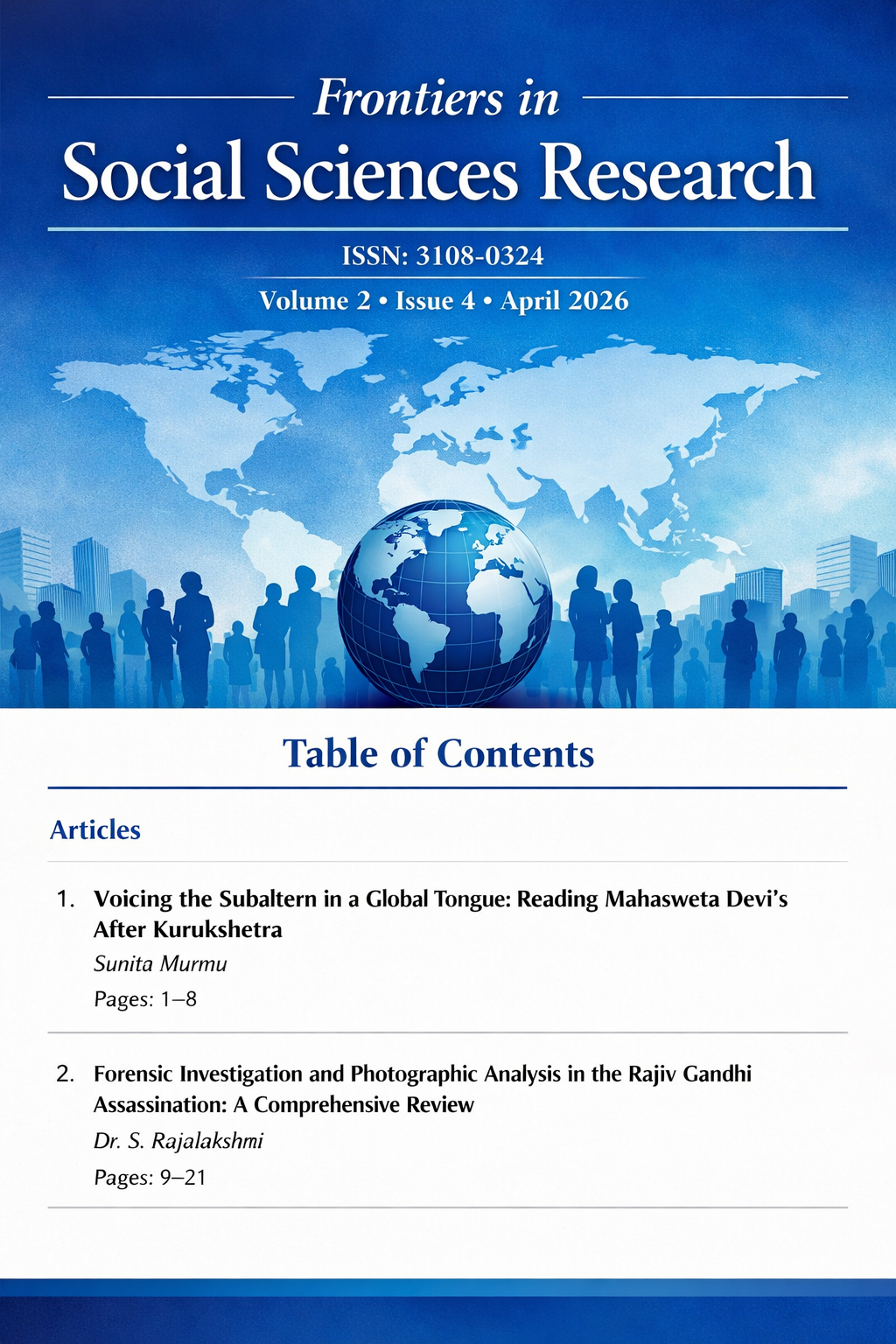
Forensic Investigation and Photographic Analysis in the Rajiv Gandhi Assassination: A Comprehensive Review
DOI:
https://doi.org/10.24113/genycz15Abstract
The assassination of former Indian Prime Minister Rajiv Gandhi in 1991 remains one of the most high-profile political crimes in the country’s history. This paper examines the role of forensic investigation, particularly photographic and video evidence, in the resolution of this assassination case. The study explores the significance of crime scene documentation, victim analysis, bomb and shrapnel analysis, surveillance footage, and ballistics and explosive residue in piecing together the events leading to Rajiv Gandhi’s death. Through a detailed review of these forensic methodologies, this paper highlights the critical role of photographic evidence in establishing timelines, identifying suspects, and understanding the mechanics of the attack. The analysis also provides suggestions for enhancing future forensic investigations, emphasizing the integration of advanced technologies, interdisciplinary collaboration, and improved legal frameworks for handling forensic evidence. The findings underscore the importance of forensic documentation in securing justice in high-profile cases and offer valuable insights for law enforcement agencies in future criminal investigations.
Downloads
Published
Issue
Section
License
Copyright (c) 2026 Dr. S. Rajalakshmi (Author)

This work is licensed under a Creative Commons Attribution 4.0 International License.
License Terms (CC BY 4.0)
All articles published in Frontiers in Social Sciences Research (FSSR) are licensed under the Creative Commons Attribution 4.0 International License (CC BY 4.0).
Under this license, readers are free to:
-
Share — copy and redistribute the material in any medium or format
-
Adapt — remix, transform, and build upon the material for any purpose, even commercially provided that the following conditions are met:
Attribution
You must give appropriate credit to the original author(s), provide a link to the license, and indicate if any changes were made.
Attribution should not suggest that the author(s) or the journal endorse your use of the work.
No Additional Restrictions
You may not apply legal terms or technological measures that legally restrict others from doing anything the license permits.
License Link
To view a copy of this license, visit: